
by Andi Benjamin
It’s part of an editor’s job to be aware of intellectual property issues, but how much do we really know about it? Andi Benjamin explains copyright, the difference between plagiarism and copyright infringement, and fair dealing to help us make a bit more sense of this complex matter.
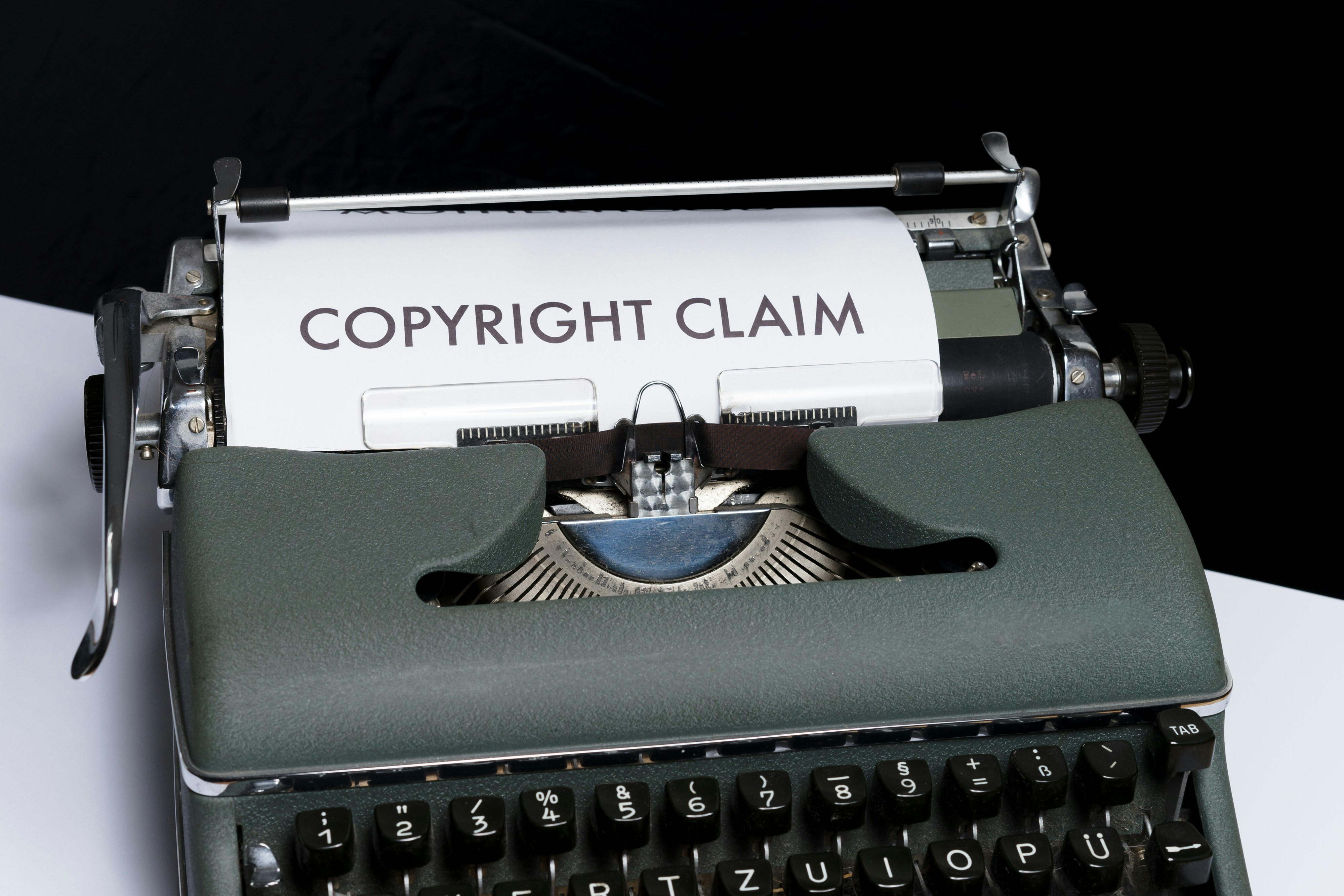
It’s bright and early, the coffee’s piping hot, and you’re ready to tackle that new manuscript. As you read through the opening chapters, a familiar passage catches your eye. After a quick search, you discover that several paragraphs have been copied almost verbatim from a bestselling novel.
Editors often come across intellectual property (IP) issues in their work, including copyright infringement, plagiarism, trademark concerns, defamation, and issues around quotations and citations. Understanding what they are and how to respond to them is part of the editor’s role. This article addresses some of the most common questions editors have about IP.
What is copyright?
Copyright is a set of legal rights under Canada’s Copyright Act that protects original literary, dramatic, musical, and artistic works. They give the creator (or copyright owner) exclusive control over how their work is used, reproduced, or distributed.
Copyright protection begins automatically when an original work is created and lasts for the author’s lifetime plus seventy years after their death. (Prior to December 30, 2022, the term was life plus fifty years.)
Copyright owners have the exclusive right to
- reproduce or copy the work,
- adapt the work (for example, to translate a book or turn a novel into a play),
- distribute or sell the work, and
- publicly perform or display the work.
In addition to these economic rights, the Copyright Act also grants authors moral rights, which protect their connection to the work:
- Right of paternity: The right to be identified as the author of a work, remain anonymous, or use a pseudonym.
- Right of integrity: The right to object to changes to a work that could harm the author’s honour or reputation.
- Right of association: The right to prevent the work from being associated with a product, service, cause, or institution that could harm the author’s honour or reputation.
In practice, copyright law tries to strike a balance between two goals: encouraging creators to produce new works and allowing the public to use and access those works. For editors working with original works, understanding basic copyright principles can help identify potential issues and avoid infringement.
What is plagiarism?
Plagiarism occurs when someone presents another person’s words, ideas, or creative work as their own, without giving proper attribution to the original creator. It can take several forms, including
- copying sections of text without properly citing their source,
- paraphrasing another person’s work too closely without acknowledgment,
- using someone else’s ideas, research, or arguments without acknowledgement, or
- using art, graphs, illustrations, maps, statistics, or photographs without proper citation.
Plagiarism can be intentional or unintentional, such as when words or ideas are cited inaccurately or insufficiently.
Plagiarism vs. copyright infringement: What’s the difference?
While plagiarism and copyright infringement can overlap, they are distinct concepts.
Plagiarism is mainly about attribution. Copyright infringement, by contrast, is about permission. It occurs when someone exercises one of the copyright owner’s exclusive rights (outlined in the Copyright Act) without their consent. This can include copying, performing, selling, distributing, or posting a work online without authorization.
Unlike copyright infringement, plagiarism is not a legal offence. Instead, it is typically considered an ethical, academic, or professional issue.
In some situations, plagiarism and copyright infringement can take place at the same time. For example, a writer who claims to have written passages that were actually copied from a copyrighted book may be committing both plagiarism and copyright infringement.
In other cases, only one of the two may apply. A writer who uses an idea from a public domain source without attribution may be plagiarizing but not infringing copyright. Conversely, a writer who reproduces a copyrighted work with proper attribution but without permission may be infringing copyright, even though they are not plagiarizing.
What is fair dealing?
As noted above, there are exceptions to Canadian copyright law. These are known as the fair dealing provisions. Fair dealing allows for the use and reproduction of copyrighted works without permission for specific purposes:
- research
- private study
- education
- criticism
- review
- news reporting
- parody
- satire
The purpose of the fair dealing provisions is to allow the public to access and engage with creative works without unfairly harming the copyright owner.
A use that falls within one of the above categories doesn’t automatically make it lawful; it must also be considered fair in the circumstances. Legally, fairness is based on several factors:
- Purpose of the dealing: Is the use commercial, or is it for research, education, or another permitted purpose?
- Character of the dealing: How was the work used? How widely was it distributed?
- Amount of the dealing: How much of the work was copied?
- Alternatives to the dealing: Was it necessary to use the work, or could a different work have been used instead?
- Nature of the work: Is there a public interest in sharing the work? Was it previously unpublished?
- Effect of the dealing on the original work: Does the use compete with or negatively affect the market for the original work?
Because fair dealing is so context-dependent, editors should not assume that copying a certain number of words or a percentage of a work is automatically permitted. The key question is whether the use is fair, given its purpose, scope, and impact on the original work.
If a source is cited, is it safe to use?
If a source is cited, that doesn’t necessarily make it safe to use. Proper citation may help avoid plagiarism, but it doesn’t necessarily prevent copyright infringement. A writer can correctly attribute a source and still infringe copyright if they reproduce protected material without permission, and the use doesn’t fall within fair dealing.
Citation and copyright are separate issues: citation is about giving credit, while copyright is about legal permission to use the material. In addition to checking for proper attribution, editors should also be alert to potential copyright issues when reviewing quotations, images, charts, or excerpts.
Final thoughts
IP issues can create significant legal, ethical, and reputational risks for authors and publishers. By understanding these concepts and knowing when to raise concerns, editors can play an important role in reducing risk throughout the publishing process.
As Canadian copyright law continues to evolve, staying informed through professional development opportunities, Editors Canada resources, and updates to the Copyright Act can help editors navigate these issues with greater confidence. This not only protects authors and publishers but also strengthens the editor’s role in safeguarding the quality, integrity, and standards of professional publishing.
Andi Benjamin, MA, JD, is a legal editor and writer based in Toronto. She is the owner of AB Edits.
This article was edited by Michelle Golubev, an Editors Canada student affiliate. Michelle is working towards her Editorial Skills certificate from George Brown Polytechnic and recently launched her own website, commasense.ca.


