by Natalia Iwanek
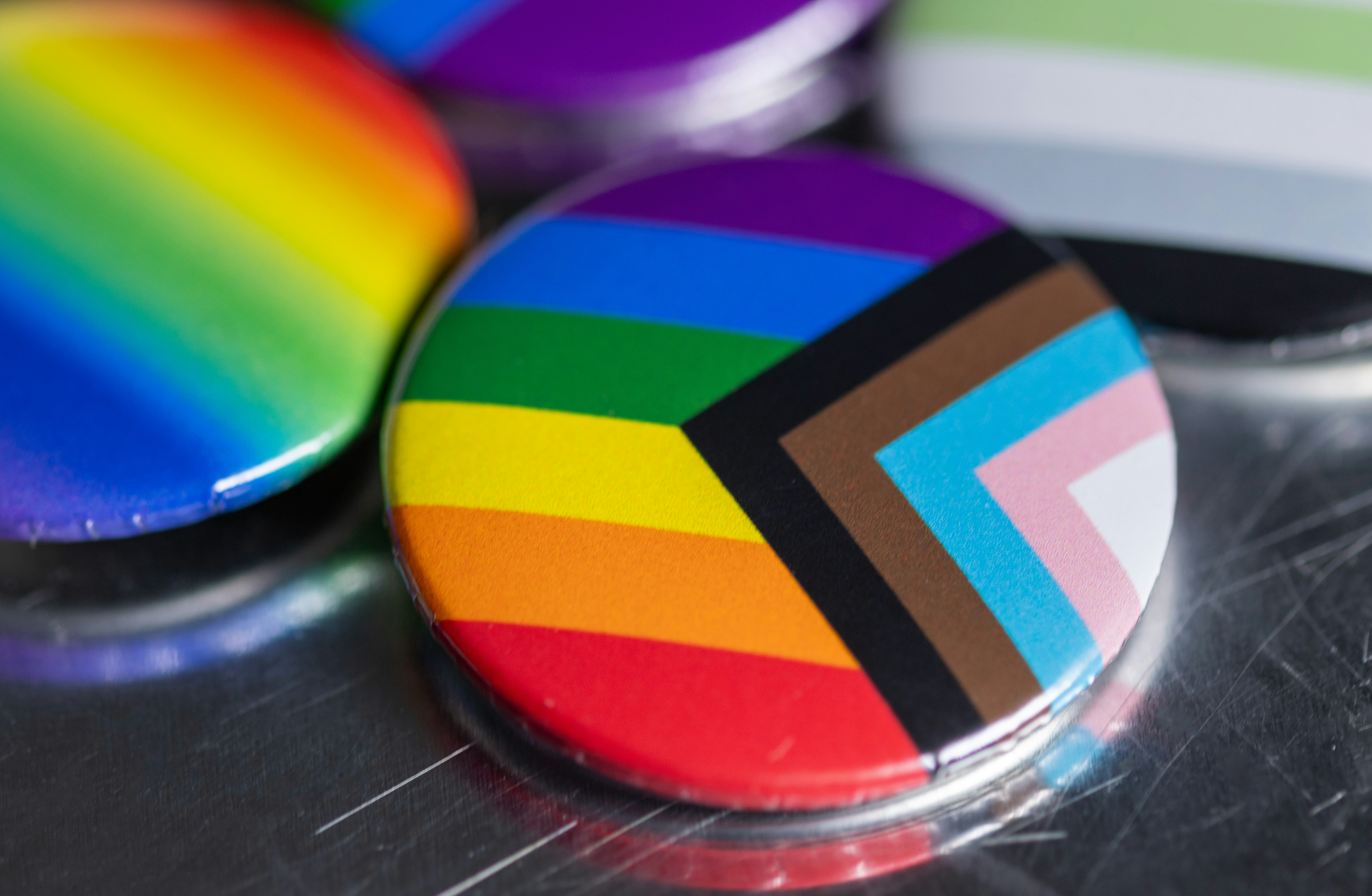
In recent years, editing and writing-related industry standards have increasingly implemented inclusion, diversity, equity, and accessibility (IDEA) frameworks and the use of conscious and/or inclusive language.
While many celebrate these types of developments – as seen most recently with the highly anticipated publication of Karen Yin’s The Conscious Style Guide: A Flexible Approach to Language That Includes, Respects and Empowers, the second edition of Dr. Gregory Younging’s (lead editor Warren Cariou) Elements of Indigenous Style: A Guide for Writing By and About Indigenous Peoples, plus thought-provoking Editors Canada webinars, programs at the branch level, and courses at various US-based editing organizations – these changes have not been without some contention.
For instance, debate has occurred when these types of frameworks and suggestions are applied to authenticity (sensitivity) reading. Of late, we have also witnessed the dismantling of IDEA (also known as EDI/DEI) programs throughout the United States and Canada and of protections for many equity-deserving communities (including LGBTQIA+, and specifically, trans individuals) in the US, in Canada, and globally.
With this increased global rhetoric and legal rulings inciting violence against equity-deserving communities, including 2SLGBTQIA+ people, it is now more important than ever to consider how our language choices, including in our editing work, have very real consequences on the lives of those who experience oppression.
But wait! Positionality statement and geographical context
Before we continue, I would like to position myself and state that this is written from my personal perspective and lived experience, and may not reflect the experiences of many, most, or all. (Hi! I’m Natalia. My pronouns are she/they, used interchangeably. I am a disabled, Eastern European immigrant/settler, queer editor/authenticity reader, and current co-editor-in-chief of BoldFace.) Conversation and submissions on this topic are always welcome and appreciated.
While I suggest some evolving practices in this piece, please note that the lived experiences of 2SLGBTQIA+ individuals are vast, varied, and cannot be considered a monolith. In addition, experiences of gender identity and sexual orientation intersect with race, ethnicity, religion /faith, socio-economic class, disability, size, migration status, and more, while experiences of oppression – such as transphobia and homophobia – compound with experiences of racism, xenophobia, classism, ableism/disablism, faithism, sizeism, and so on.
For this reason, my main suggestion is to always defer to how individuals self-identify, as well as to respect individual language choices.
On a final note, this is mainly written from an English-language, Canadian-immigrant/settler context, and much of this terminology is specific to this region. For consistency, I have used certain terms and acronyms, but variations exist. Those who wish to know more about this topic in a global, multilingual context, can refer to readings on the roots of oppression from a colonial context and learn about the diversity of global terms to describe identities and experiences. In many languages, various cultural terms cannot – and should not – be translated into English and (in this case) the Canadian context.
Defining conscious/inclusive language and microaggressions
While both conscious and inclusive language exist on a variety of topics, this particular article focuses on 2SLGBTQIA+ affirming language.
Let’s begin with a few definitions. In general, conscious language, a term coined by Karen Yin, author of the above-mentioned The Conscious Style Guide, is defined as “language that is rooted in critical thinking and compassion, used skillfully in a specific context.”
According to Yin, some conscious language best practices include considering personal assumptions about the intended audience and considering if the writing will “cause harm to historically excluded communities.” (Further reading specifically related to gender identity and sexual orientation can be found on The Conscious Style Guide website.)
Similarly, inclusive language (or writing) is defined as writing that seeks “to promote inclusion and respect for diversity” and “to eliminate all forms of discrimination based on sex, gender, sexual orientation, race, ethnicity, disability or any other identity factor,” according to the Government of Canada.
Some inclusive language best practices include avoiding conscious and unconscious biases and harmful terminology.
In addition, when editing content, it is helpful to learn about common microaggressions faced by 2SLGBTQIA+ individuals, such as assumptions, commentary, biased terminology, invasive questions, and so on. (Crystal Shelley’s Rabbit with a Red Pen site is a helpful resource for microaggressions in editing in general.)
Inclusive language across (linguistic) borders
While this article specifically focuses on 2SLGBTQIA+ affirming language in a Canadian English context, it is important to mention that, on Turtle Island, pre-colonization terminology and gender expression in many Indigenous languages, such as Anishinaabemowin, were often (and are) not based on binary constructions.
While the English language has been undergoing changes to become increasingly inclusive, many issues remain. (For those interested in a more general overview of gender-inclusive language, the Government of Canada also offers resources in the Canadian historical/governmental/legal contexts.)
For instance, while “English grammar doesn’t [typically] distinguish between genders [for nouns] except in assigning a masculine or feminine singular pronoun,” such as “she” or “he,” we have seen the increased use (or return of) the singular “they,” which can be used to refer to “[a] generic individual whose gender is unknown or irrelevant in the context [or a] specific person” who uses these pronouns. (For those interested in further reading, please refer to the Trans Journalists Association Stylebook on the singular “they.”)
In contrast, many languages are gendered in terms of their very grammatical structure. However, various language revolutions are happening globally, not only in terms of terminology, but also in terms of grammatical structure.
For example, the Spanish language genders its nouns. A noun, such as “non-binary” (a grammatically neutral noun in English), could still, in effect, appear gendered with an “o” in the masculine (“no binario”). To counteract this, in the lenguaje inclusivo (inclusive language) movement, the gender-neutral termination “e” is now being increasingly used (although it has not yet been accepted by many language organizations). A term like “no binario” can become “no binarie,” a noun that is not gender-specific. This rule can also apply to various other gendered nouns, with the gender-neutral “amigue” for “amiga/amigo” (friend) and “todes” for “todas/todos” (everyone).
Similarly to English, some use the pronoun “elle” as a singular “they” in place of the gendered “ella/él” (she/he). (At times, an “x” is used in place of the “e.” This is an ongoing conversation with much nuance in various communities and geographical locations, which is beyond the scope of this article. Further reading is encouraged.)
Increased conversations about the use of inclusive and gender-neutral language are also taking place in French, German, Arabic, and Hebrew, among others. As in English, there is a great deal of dialogue about these uses. (For editors working in the French-Canadian context, further readings on the history and current state of gender-neutral terminology are encouraged.)
Finally, these conversations are also occurring between those who are concerned with preserving “traditional” language norms and those who stress the constant evolution of language – and the very real consequences of language choices on people’s lives – including in the editing and writing worlds. My advice is to consider the origins of these norms, and question who they continue to benefit – and who they continue to oppress.
Changing editing conventions: The singular “they”
In the editing world, one such conversation is the use of the singular “they.” The 18th edition of The Chicago Manual of Style (CMOS) has updated the section on the singular “they.” In particular, CMOS lists three main uses, one of which states, “Some people use they and them (or some other non-binary singular pronoun) rather than he and him or she and her; this usage, when known to apply to a specific individual, should be respected.” (Please see section 5.266: Uses of singular “they” for further information.)
In 2017, the Associated Press (AP) Stylebook advised using the singular “they” with limits, stating, “They/them/their is acceptable in limited cases as a singular and/or gender-neutral pronoun, when alternative wording is overly awkward or clumsy. However, rewording usually is possible and always is preferable.” However, AP suggested to “use the person’s name in place of a pronoun, or otherwise reword the sentence, whenever possible. If they/them/their use is essential, explain in the text that the person prefers a gender-neutral pronoun.” As of 2022, “as much as possible, AP now uses they/them/their as a way of accurately describing and representing a person who uses those pronouns for themself. This is an expansion on our more limited 2017 guidance.” (For the full entry with details, please consult the AP Stylebook.)
In my editing work, when discussing gender identity and the use of the singular “they,” I defer to the individual and the Trans Journalists Association’s Editorial Best Practices, which state, “There is never a reason to explain the use of standard they/them, he/him, or she/her in a story when an individual has provided their pronouns.” (Please consult the association’s website for the full entry.)
Defining 2SLGBTQIA+ and associated terms
With regards to terminology, there is no single acronym, and various terms are used by individuals. While in the United States it is common to use LGBT or LGBTQIA+, in Canada it is increasingly common to see variations of 2SLGBTQIA+, referring to Two-Spirit, lesbian, gay, bisexual, transgender, queer, intersex, asexual, as well as various other ways individuals identify. At times, you may also see the acronym, 2STNBGN, which represents Two-Spirit, transgender, non-binary, and gender non-conforming individuals.
Some terms are culturally specific to cultures and communities (such as Two-Spirit, hijra, transvesti, muxe, stud, butch, cuir/lo cuir, and so on). As an immigrant-settler, I would direct those who would like to learn more about the term Two-Spirit, coined by Anishinaabe Elder Mayra Laramee, to the second edition of Elements of Indigenous Style: A Guide for Writing By and About Indigenous Peoples (specifically “Chapter 10: Two-Spirit, trans, and Indigiqueer contexts”), as well hiring editors from the Indigenous Editors Association. (For terms in a global context, please see the Trans Journalists Association’s Editorial Best Practices for discussion and links for further reading.)
Suggested practices for 2SLGBTQIA+ affirming terminology
The varied experiences of individuals make it incredibly difficult to even begin to consider “suggested” practices for editing 2SLGBTQIA+ affirming terminology.
As with any identities, editors and writers can work with authenticity/sensitivity readers and connect with the LGBTQ+ Editors Association to ensure accuracy.
It is also incredibly important to read widely and deeply, including fiction and non-fiction/media by 2SLGBTQIA+ individuals, and from perspectives outside of our personal lived experiences. (A non-exhaustive list of authors who consider themes of orientation, gender, and the intersections of identities in their works include James Baldwin, Audre Lorde, Ocean Vuong, Danny Ramadan, Billy-Ray Belcourt, Joshua Whitehead, Samra Habib, Vivek Shraya, Carmen Maria Machado, Chinelo Okparanta, Akwaeke Emezi, Alana S. Porteo, Leslie Feinberg, Camila Sosa Villada, Claudia Rodríguez, Pedro Lemebel, Cherríe Moraga, Gloria E. Anzaldúa, and Judith Butler.)
When editing, one quote I often think about is from Alex Kapitan (The Radical Copyeditor’s Style Guide for Writing About Transgender People) who states, “Respect the diversity of language that people use to describe themselves.”
Below are additional useful practices:
- Being specific about how individuals self-identify, instead of defaulting to umbrella terms.
- Learning about language diversity with which individuals, cultures, and Nations globally describe themselves outside of a settler-colonial, English-speaking Canadian context, including culturally appropriate terminology.
- Understanding the roots of oppression under colonial and imperialist governments, which continue to this day.
- Understanding the intersections of identity.
- Learning about microaggressions in editing.
- Respecting the use of reclaimed slurs used by individuals (and understanding the history of terms).
- Avoiding making assumptions about an individual’s pronouns. (Avoiding the term “preferred” pronouns.)
- Respecting the use of the singular pronoun “they.”
- Keeping in mind that pronouns come in variations, such as (but not limited to) they/them, she/her, he/him, she/they, they/she, he/they, they/her, as well as neopronouns, such as xe/xem, ze/hir, ey/em, and so on.
- Consulting well-known style guides by and for communities, such as the Trans Journalists Association, The Radical Copyeditor’s Style Guide to Writing about Transgender People, The Diversity Style Guide, and The Conscious Style Guide.
- Hiring authenticity/sensitivity readers to identify stereotypes, tropes, biases, and inaccuracies.
- Keeping up with language changes.
Reflections and resources
Understanding one’s identity can be a lifelong process, and each day, each new experience and each new resource brings increased understanding of oneself and the world around us. Despite oversimplifications, sexual orientation, gender identity, gender expression, and identity are incredibly complex and nuanced.
The series of readings below has helped me in my journey to best describe my personal lived experience and to understand identities and experiences apart from my own.
- The Radical Copyeditor’s Style Guide to Writing about Transgender People
- The Trans Journalists Association Stylebook and Coverage Guide
- The Conscious Style Guide
- The Diversity Style Guide
- GLAAD Media Reference Guide
- Conscious and Inclusive Language Resources: Rabbit with a Red Pen
- Microaggressions in Editing: Rabbit with a Red Pen
- National Center on Disability and Journalism: Disability Language Style Guide
- Elements of Indigenous Style: A Guide for Writing by and about Indigenous Peoples
At times, it can feel overwhelming as 2SLGBTQIA+ individuals, and wider equity-deserving groups, are increasingly being targeted globally. However, as editors, we can play a small role in this struggle by staying curious, constantly learning, always advocating, and remaining committed to our editing professional standards: equity, diversity, inclusion, and accessibility.
Natalia Iwanek (she/they) is the co-editor-in-chief of Boldface and a master’s of Spanish translation student who overthinks the nuances of language, style, and accessibility. Natalia was a recipient of the Editors Canada President’s Award for Volunteer Service in 2021 and 2022.
This article was copy edited by Emily Faubert (she/they & elle/iel), editor at MLE Style Editing and PhD student at the University of Toronto’s Faculty of Information.

 BoldFace