
Many editors start their careers as in-house employees before going freelance, some of us remain with organizations throughout our careers, and some vacillate between freelancing and working in-house. As most of our articles focus on freelancing, we thought it was time to look at what our in-house colleagues do to give interested editors an idea of what this kind of work environment involves. Our second editor is Alyssa DiBattista, a senior editor at a consulting firm.
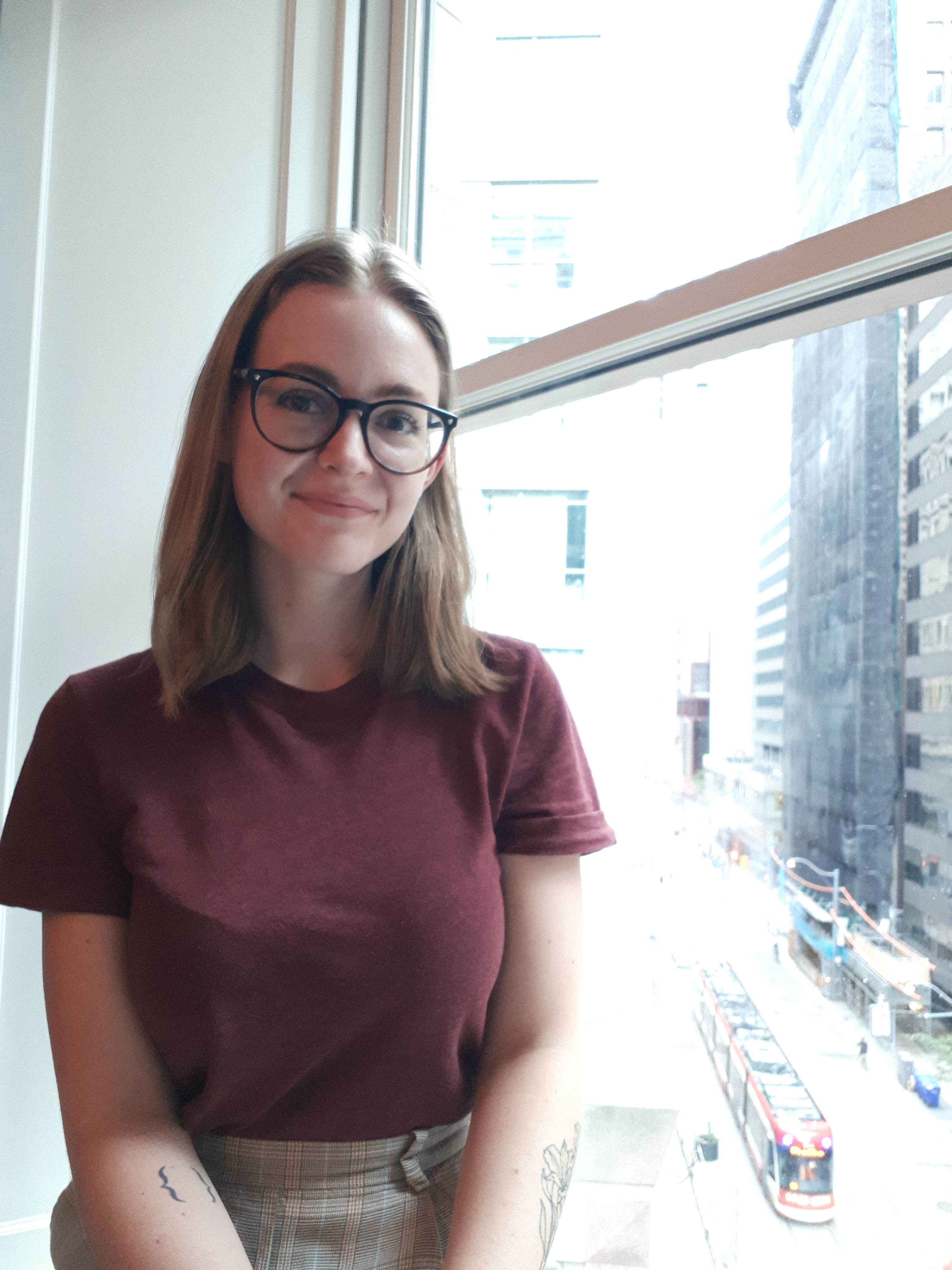
Alyssa DiBattista works in the Cyber and Data Resilience division at Kroll, a consulting firm. As senior editor, she supports the Offensive Security team in their creation of technical reports. She joined the team in 2019 after completing her studies in English literature at the University of Toronto. Additionally, Alyssa operates a small business called Fewer, Better Words, where she provides a variety of editorial services.
What are your responsibilities, and what subject matter do you work with in a typical workday?
I review technical reports written by our consultants to our clients to document the findings of their cybersecurity testing. My editorial focuses are primarily copy and stylistic editing, but they tend to organically expand to include proofreading and a few substantive edits, too. I work on the Quality Assurance team, covering pretty much anything related to content, templates, formatting, and reporting tools.
I’m also responsible for tasks such as maintaining the in-house style guide, training editors and writers, and helping to ensure the smooth operation of the editorial team.
What skills have been most valuable in navigating your in-house role (as opposed to freelancing)?
Because I work within a team and in the context of a company, it’s been important for me to use and continually develop skills such as leadership, communication, problem-solving, and teaching. They help me to get ahead of potential issues, suggest process improvements, and train new writers and editors in their roles. In a way, corporate life is an ongoing series of group projects (something that I know many freelancers are glad to be rid of!). Yes, I’m editing a lot every day, but I’m also providing troubleshooting support when a reporting tool breaks, answering questions that other editors raise, asking my own questions, and crafting feedback to help guide writers to strengthen their work. If you work in-house, the willingness and ability to learn new skills can be quite valuable. I think that if you can balance being a great editor with striving to become a jack of all trades with your soft skills, your career opportunities can expand even further.
What made you choose in-house editing?
I love the freedom to not worry about all the overheads of running my own full-time business or about where my next source of income is coming from. Being part of a company where those matters are taken care of really provides mental relief for me. I know that some editors feel a greater sense of freedom through being able to completely manage their own workflow – so it’s important to understand your own priorities. Everyone’s different.
I also love that I get to work with other people and have at least some sense of community in my work. Even on the days that I work from home, I don’t end up feeling lonely. My team is incredible, and I don’t need to have the solution for every challenge that comes up because there are other editors to workshop ideas with.
I do operate a small business for any freelancing side projects that come up, and that allows me to accept a variety of work opportunities and try out new types of projects.
Do you have to collaborate with other team members, and who are they?
My editorial team consists of eight people, one of whom is the manager of our group. My role is senior editor, and I do a lot of day-to-day editing but also oversee some projects related to standardization and internal quality assurance for the team. We message each other all day, every day, while we’re working – asking questions, making suggestions, raising issues, diving into syntax rabbit holes, and joking around. It’s a real pleasure to have that dynamic with other people who are as passionate about language as I am. Almost everyone has an academic background in the humanities, which helps give us a fresh perspective on the technical material that we edit.
How does working as part of a team affect or change your editing process, as opposed to working on your own (or as a freelancer)?
In a team, occasionally you have to compromise on things such as your own editorial preferences or pet peeves. We operate fairly democratically to set the style standards and to work through niche questions when they come up, so it’s a process, but it’s well worth the effort. As a freelancer, in some ways you have the convenience of deferring to whatever the author’s or publisher’s chosen style is. On my team, we are the last (and only) line of defence for matters related to content and standardization. There’s something exciting about that privilege, but it can also be challenging, especially in the context of a technical field, where there is a lot of jargon, unusual language conventions, and inconsistent naming choices. We look up proper nouns and usages every single day! I’m glad to have other people to work through those decisions with.
What advice can you give to in-house editors who are looking to stand out during an interview and/or in their role?
My advice to editors who are currently in-house or who want to be is pretty simple: be excellent at what you do know how to do, and be honest and open to learning about what you don’t know. If you are looking to get an in-house role, it is quite unlikely these days that you’ll end up in a setting such as publishing (which is the dream for many of us). My understanding is that there aren’t a lot of in-house editorial roles to go around in publishing, especially not entry-level ones. Instead, I would encourage you to keep an open mind about fields that you are not necessarily familiar with (or even interested in at first) in order to widen your search range. In my experience, getting into cybersecurity was entirely unexpected, and, frankly, I was surprised to get my foot in the door. But my enthusiasm for editing and language proficiency gave me an advantage because, truthfully, writing was not the key strength of many of the people I would be working with. Editors have the opportunity to provide a valuable skill set in settings where language expertise is rare. That’s your place to shine!
On the practical side: your résumé must be in pristine condition. Seriously, proofread it at least ten times, and check every millimetre of the layout. You might be surprised by the issues that I’ve seen when people apply for editing roles on my team – typos, inconsistent punctuation choices, arbitrary capitalization, double spaces, non-parallel lists, and font changes. It’s also a good idea to seek professional development training. An editing course can help you learn new things and reveal some weak areas that you didn’t even know you had.
What are the biggest advantages and challenges of working in-house (versus freelance, if you want)?
A big advantage of working in-house is that you have the infrastructure of so many other team members around you. You don’t have to be responsible for as many administrative, non-editing tasks as you do when you work for yourself. You can ask other people for help. You can hand off a task to a teammate if you need to step out for an appointment. Your authors are available through a messaging system and may even be sitting right next to you in the office, so you can contact them whenever you need to. And you don’t have to worry about losing income when you are sick or on vacation. Working in-house can have a nice, symbiotic quality to it.
There are certainly aspects of working in-house that can be challenging. I’m fortunate to have flexible working hours, but not every in-house role will have that. You don’t get to choose which projects you’ll take on – you edit whatever needs editing, even when it’s behind schedule, requires rewriting, or isn’t what you feel like working on. There can be editorial disagreements among teammates, and you have to work together to reach a resolution. There’s also the challenge of trying to ensure that the editorial staff are all meeting the same standards so that clients receive consistent content. That process is always ongoing. The writers you work with may or may not be writers by trade; for example, in my case, our writers are cybersecurity experts who write as part of their role. Some of these writers may struggle with or simply not enjoy drafting a report; maybe their writing is even quite difficult to edit. In-house, you have to constantly negotiate and maintain relationships with your writers while trying to provide feedback that will result in even better work in the future.
This article was copy edited by Shivaughn King, a freelance copy editor living in Calgary.

 BoldFace